

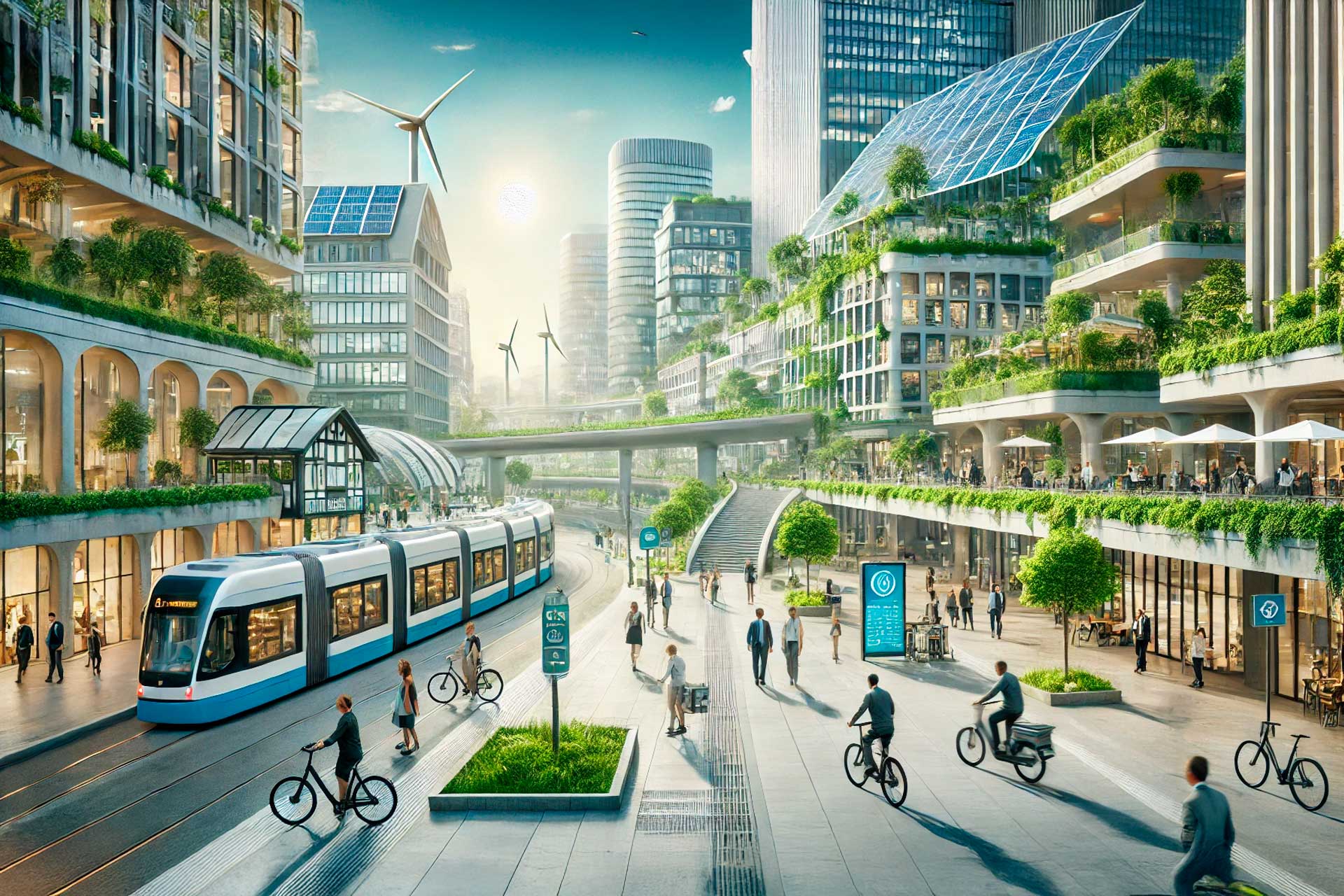
Switzerland stands out as one of the global leaders in the green transition, thanks to its advanced entrepreneurial ecosystem, strict environmental policies, and strong inclination toward innovation. From the green economy to smart cities, the Alpine country offers a virtuous model that can inspire and attract international collaborations, especially with Italy.
Sustainability as an Economic Value
Switzerland ranks second in both the Green Economy Index and the Robeco Sustainability Rating, demonstrating how Swiss companies export sustainability through products and processes that meet international standards. This translates into growing demand for eco-friendly solutions and a solid reputation in global markets.
Among the most active Swiss companies operating in the green sector are:
- ABB: a leader in industrial automation and energy efficiency.
- Nestlé: committed to supply chain sustainability and responsible agriculture.
- Novartis: investing in sustainable pharmaceuticals and reducing environmental impact.
- Swiss Re: promoting climate resilience and renewable energy projects.
- SBB: focusing on sustainable mobility and high-efficiency trains.
- Holcim: developing low-CO₂ construction materials.
- SIG Combibloc, Alpiq, Axpo, IKEA Switzerland: all engaged in reducing environmental impact and promoting sustainable practices.
A notable example is Lidl Switzerland, the first company in the country to receive the third Lean & Green star for significantly reducing CO₂ emissions.
Innovation and global leadership
Switzerland is not only a leader in technological innovation but also stands out for its commitment to the green transition. According to the 2024 Environmental Performance Index (EPI), the Confederation scored 68, ahead of Italy (60.5), France (67.1), and just behind Germany (74.6). This score reflects not only the quality of environmental policies, ecological health, and climate change responsiveness of its business ecosystem, but also Switzerland’s investment in green tech startups.
Examples include:
- Metafuels (Zurich): developing sustainable aviation fuels.
- Neology Hydrogen SA (Lutry): offering ammonia-based energy solutions for off-grid systems.
- Fedrok AG (Zug): innovating in blockchain for carbon emission offsetting.
Meanwhile, Germany launched a €100 billion investment plan in 2025 to accelerate decarbonization and energy transition. The country surpassed 100 GW of installed solar capacity and aims for 215 GW by 2030, while wind energy reached 136 TWh of production in 2024.
In Italy, the green tech sector is growing but remains fragmented. The country is strengthening infrastructure and promoting clean technologies, especially in manufacturing and transport. These efforts have led to a 3.9-point increase in its EPI score over the past decade.

Smart cities in Switzerland: an exportable model?
Swiss smart cities are becoming a true export product, thanks to technological solutions that enhance urban livability and reduce environmental impact. Leading companies include:
- Brunata AG: IoT consulting and scalable solutions for smart cities.
- GWF MessSysteme AG: digitization and IoT for urban services.
The national Smart City Switzerland program involves universities, federal polytechnics, administrations, and businesses, creating an innovative ecosystem that has already attracted international attention. Startups like Smixin and TreaTech have showcased their solutions in India, demonstrating the global potential of the Swiss model.
Opportunities for Swiss companies in the smart city sector include:
- Mobile communication
- Internet of Everything
- Big Data and Cloud computing
- Renewable energy
- Intelligent public transport
- 3D printing
Which will be the best solution to «past & copy»?
Switzerland’s green transformation offers concrete insights for Italy, both in terms of industrial collaboration and inspiration for public policies and business strategies. Italian SMEs, in particular, can find in Switzerland an ideal partner to develop sustainable and scalable solutions.